
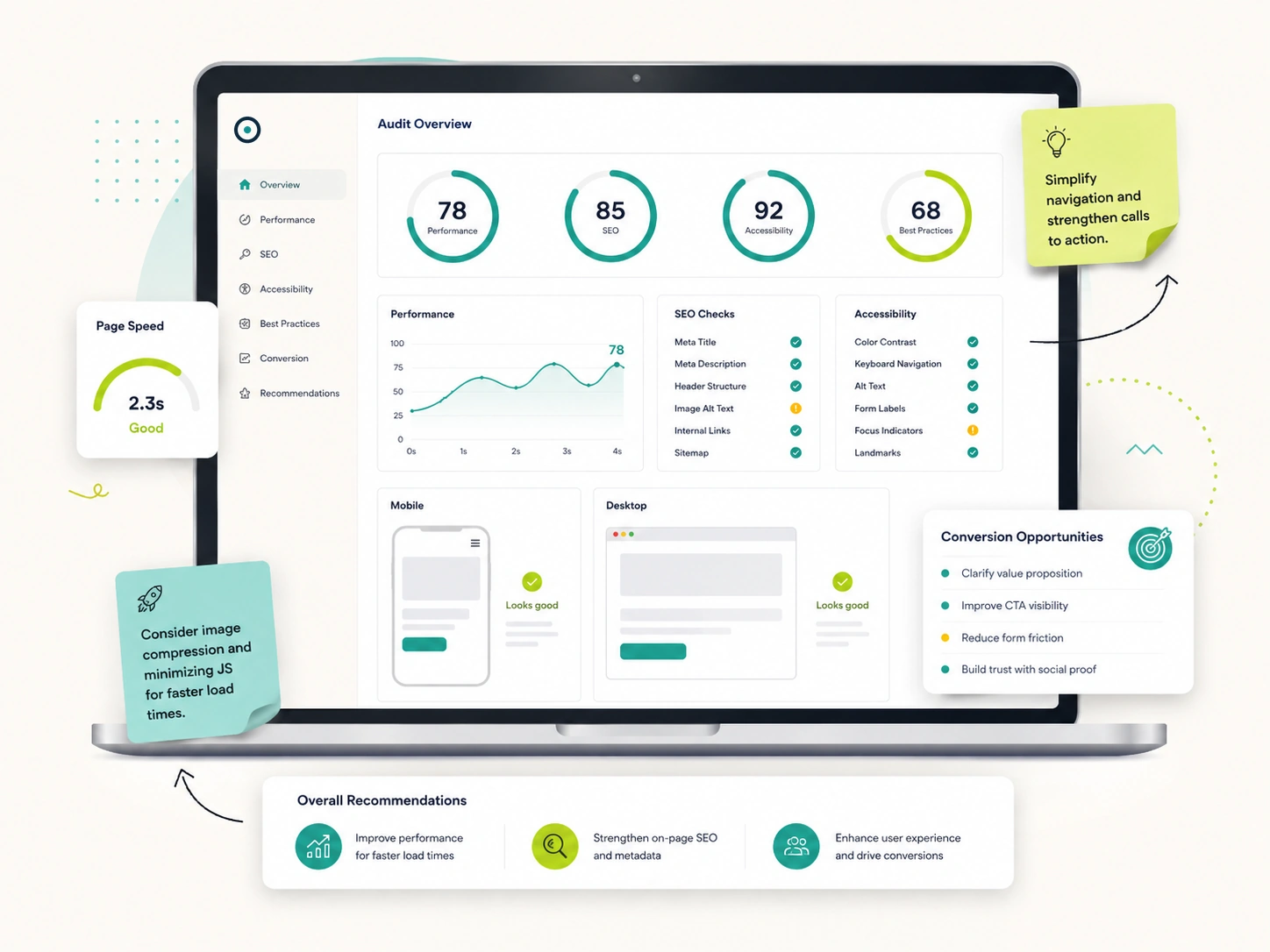
“Website audit” can mean anything from an automated SEO report to a deep review of the experience, content, accessibility, conversion paths, performance, and technical setup. The value depends on the questions being asked and the quality of the recommendations.
What a useful audit looks at
A practical audit should consider the website as a customer experience: clarity, navigation, mobile behavior, calls to action, forms, accessibility, trust signals, content hierarchy, performance, and relevant SEO basics.
Automated tools are useful, but incomplete
Performance and SEO tools can surface measurable issues, but they cannot fully judge whether your service offering makes sense, whether the hierarchy feels confusing, or whether a customer understands the next step.
The priority list is the real deliverable
A giant list of everything that could be improved is not very helpful. A strong audit separates high-impact problems from nice-to-have refinements and explains why each recommendation matters.
A free audit can be a good first filter
A short review can surface obvious friction and help determine whether the next step should be a redesign, targeted fixes, technical work, or a deeper paid audit.
When a paid audit makes sense
A deeper audit is especially useful before a redesign, when conversion is weak, when multiple stakeholders disagree about priorities, or when the website has accumulated years of content and functionality.
What you should expect afterward
You should leave with clear findings, prioritized recommendations, and enough context to make decisions, whether you hire the auditor to do the work or take the recommendations elsewhere.
The simplest question to ask
If you are unsure whether an audit is worth it, ask whether you currently know why the website is underperforming and what should be fixed first. If the answer is no, an audit can prevent a lot of expensive guessing.